

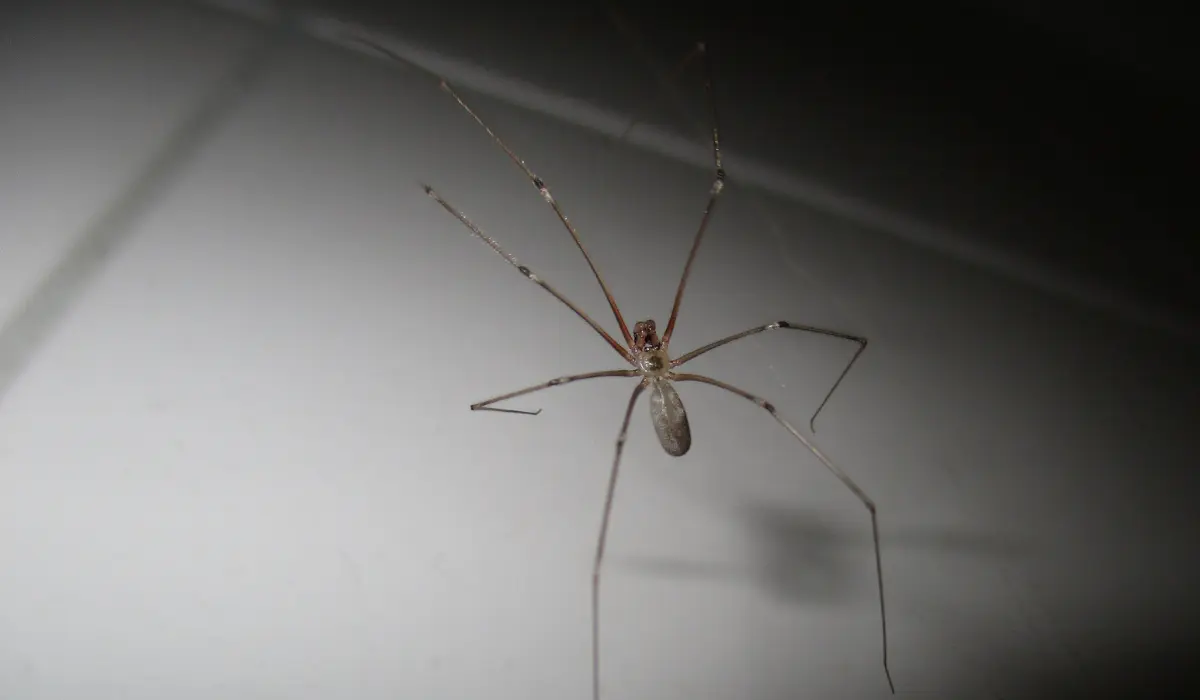
If you spot a small spider with extremely long, thin legs hanging upside down in a loose web, you may have found a cellar spider. These spiders often settle in garages, crawl spaces, closets, storage rooms, and other quiet parts of Louisiana homes where humidity, shelter, and insect prey are easy to find. Cellar spiders are not considered a significant threat to people, and a few may even help by catching insects and other spiders. The problem usually starts when their numbers increase, dusty webs collect throughout the house, or recurring spider activity points to a larger insect problem nearby.
Key Takeaways
- Cellar spiders are venomous predators, but they are not considered medically significant spiders for people.
- Their loose webs commonly appear in quiet, protected areas such as garages, crawl spaces, closets, and storage rooms.
- Repeated cellar spider activity can be reduced by removing webs, limiting insect prey, controlling moisture, and sealing entry points.
Are Cellar Spiders Dangerous to People?
Cellar spiders are not considered dangerous to people. They spend most of their time in their webs and are far more interested in capturing insects than interacting with anyone living in the home.
One reason they have an alarming reputation is a long-running myth that claims cellar spiders possess extremely dangerous venom but cannot harm humans because their fangs are too short. That explanation is not supported by scientific evidence.
For Louisiana homeowners, the practical concern is usually not a bite. It is whether cellar spiders are appearing in numbers large enough to create unwanted webbing or whether their presence points to an abundance of other insects inside the home.
Do Cellar Spiders Have Venom?
Yes. Cellar spiders use venom to immobilize the small insects and other arthropods they catch.
Having venom does not automatically make a spider dangerous to humans. Many spiders use venom as a hunting tool while posing little concern to people.
The claim that cellar spiders possess exceptionally powerful venom is not backed by evidence. Their venom is adapted for prey, and cellar spiders are not considered medically significant spiders.
Can Cellar Spiders Bite?
Cellar spiders are not known as aggressive spiders, and bites are not considered a significant concern for homeowners. Like most spiders, they would rather remain hidden or move away than interact with a person.
It is also better not to explain their low bite risk by claiming their fangs are physically unable to penetrate skin. If you are trying to determine what caused an unexplained mark, spider bite pictures can provide general comparison points, but skin appearance alone cannot reliably identify the spider responsible.
The length of a skin reaction can vary based on the cause and the person. Knowing how long a spider bite may last can provide context, but finding and identifying the actual pest is more useful than diagnosing a bite from appearance alone.
What Is a Cellar Spider?
Cellar spiders belong to the spider family Pholcidae. The long-bodied cellar spider, Pholcus phalangioides, is one of the species commonly associated with buildings and is easy to recognize by its small body and extremely long, delicate legs.
Unlike spiders that build tidy circular webs, cellar spiders create loose, irregular silk structures. You may find them hanging upside down beneath their webs in ceiling corners, garages, crawl spaces, closets, sheds, and other areas that remain relatively undisturbed.
Louisiana homes can offer plenty of suitable habitat because warm weather, humidity, and year-round insect activity provide both shelter and food. Cellar spiders are just one of several common house spiders found in Louisiana, so body shape, web style, and location can all help with identification.
Cellar Spiders vs. Daddy Longlegs
Cellar spiders are sometimes called daddy longlegs, but that nickname can cause confusion. Harvestmen are also commonly called daddy longlegs, yet they belong to a different group of arachnids.
Cellar spiders are true spiders. They have two main body regions, produce silk, build webs, and use venom to subdue prey.
Harvestmen have a different body structure and do not build silk webs. If the long-legged arachnid is hanging in a loose indoor web, you are much more likely looking at a cellar spider.
Are Cellar Spiders Beneficial in Louisiana Homes?
Cellar spiders can be useful predators because they eat other small pests. In Louisiana, where warm conditions support insects through much of the year, a web in a quiet garage or storage space may catch flies, moths, mosquitoes, and other arthropods that wander indoors.
Long-bodied cellar spiders can also prey on other spiders. That does not mean they will control every spider or insect problem in your home, but it explains why they often remain in areas where prey is plentiful.
Whether you leave one alone usually comes down to location and personal tolerance. A single spider in an out-of-the-way garage corner may not bother you, while dozens of webs across a living area are a different problem.
What Do Cellar Spiders Eat?
Cellar spiders feed on insects and other arthropods that enter or approach their webs. Small flies, moths, mosquitoes, and other spiders may all become prey.
Their feeding habits can give you a clue about why they are staying in a particular area. If new spiders and webs repeatedly appear after you remove them, the space may still offer a steady food source.
That is especially relevant around exterior doors, garage lights, porches, and windows. Outdoor lighting can draw flying insects toward the house, which gives spiders more opportunities to build webs near those entry points.
How Cellar Spiders Compare With Other Louisiana Spiders
Cellar spiders stand out because of their extremely long legs, small bodies, and loose indoor webs. Other Louisiana spiders can look very different, which is why identification based only on the word “spider” is not enough.
Large species may be more startling even when they are not considered a major threat. For example, huntsman spiders are known for their size and speed, while banana spiders in Louisiana are more likely to be noticed outdoors because of their large webs and distinctive appearance.
Small spiders can create the opposite problem because their features are harder to see. If you find a tiny black spider inside your home, body shape, markings, web type, and location can help narrow down what you are seeing.
Brown coloration alone also does not identify a dangerous spider. Louisiana has several brown spiders that can be confused with one another, so identification should rely on more than color.
Where Do Cellar Spiders Hide in Louisiana Homes?
Cellar spiders prefer protected areas that remain quiet for long periods. They are often easier to find by looking for their loose webs than by searching directly for the spider.
Louisiana homes also present some conditions that can favor both spiders and their prey. Humid crawl spaces, garages, storage areas, and sheltered corners can support insect activity, giving cellar spiders a dependable place to feed.
Common areas to check include:
- Ceiling and wall corners
- Garages and sheds
- Crawl spaces
- Closets and storage rooms
- Behind shelving and stored items
- Around utility areas
- Near windows and exterior doors
- Beneath porches or other covered spaces
A few webs concentrated in one rarely used area may be easy to manage. Fresh webs appearing across several parts of the home suggest you should look at what is attracting spiders and their prey.
Why Cellar Spiders Keep Showing Up
Cellar spiders remain where they have shelter and enough insects to eat. Removing a spider without changing those conditions can result in another one occupying the same area later.
In South Louisiana, insect activity can remain high for much of the year. Warm temperatures and humid conditions mean garages, crawl spaces, porches, and other protected areas may continue providing prey even outside the hottest summer months.
Several conditions can contribute to recurring activity.
Plenty of Insect Prey
A steady supply of flies, moths, mosquitoes, and other insects gives cellar spiders a reason to stay. If you repeatedly see fresh webs, look beyond the spiders themselves.
Check whether exterior lighting is drawing insects toward doors and windows. Screens with gaps, poorly sealed doors, and other openings can also allow more insects indoors.
Reducing the prey population often makes an area less attractive to spiders without focusing on every individual spider you see.
Humid or Damp Areas
Persistent moisture can support insects and other small arthropods that cellar spiders feed on. Crawl spaces, utility areas, garages, and other protected spaces may stay damp longer in Louisiana’s humid climate.
Repair water leaks and address areas where moisture repeatedly collects. Ventilation or moisture management may also help in enclosed spaces where damp conditions persist.
The goal is not to eliminate normal Louisiana humidity. It is to correct unnecessary moisture that supports pest activity around the home.
Clutter and Undisturbed Storage
Boxes, shelving, stored belongings, and crowded corners give spiders places to build webs without being disturbed. Clutter can also make it harder to notice new webs or other pests.
Organize storage areas and keep belongings from piling tightly against walls when practical. Removing unused cardboard and regularly cleaning quiet corners can make spider activity easier to spot.
This is especially useful in garages, closets, sheds, and utility rooms that may go weeks without much movement.
Easy Entry Points
Cellar spiders and the insects they eat can enter through gaps around doors, windows, vents, utility lines, and other openings.
Inspect door sweeps, window screens, garage-door edges, and utility penetrations for gaps. Sealing accessible openings helps reduce the number of pests entering from outdoors.
Pay extra attention to locations where you repeatedly find webs just inside the house. That pattern may point to a nearby source of insect traffic.
Do Cellar Spiders Multiply Quickly?
Cellar spiders can build noticeable indoor populations when conditions remain favorable, but seeing one or two does not automatically mean you have a large infestation.
Their reproduction also looks different from what many homeowners expect. Female long-bodied cellar spiders loosely wrap their eggs in silk and carry the visible cluster with their mouthparts instead of leaving a typical enclosed egg sac attached to the web.
If you see a cellar spider holding a group of small round eggs beneath its body, you may be looking at a female carrying developing eggs. Young spiders may stay around the same protected area after they emerge.
Repeated sightings of adults, young spiders, egg clusters, and new webs in several locations provide stronger evidence that the population has become established indoors.
Are Cellar Spider Webs a Problem?
Cellar spider webbing is often more noticeable than the spiders themselves. Their webs are loose and irregular, and abandoned silk can remain after a spider moves to another location.
Dust collects on old webbing, creating the cobwebbed appearance homeowners often notice in garages, storage areas, crawl spaces, and ceiling corners.
A few webs can usually be vacuumed away. If they return quickly or appear throughout several parts of the home, the more useful question is why the area continues to support spiders.
Repeated webbing can point to entry gaps, plenty of insect prey, damp conditions, or secluded hiding areas that have not been addressed.
How to Get Rid of Cellar Spiders
Getting rid of cellar spiders works best when you remove the spiders and webs you can see while also making the surrounding area less attractive.
Simply clearing a web may solve a one-time problem. Recurring activity calls for a broader look at insects, moisture, clutter, and entry points.
Remove Spiders, Webs, and Egg Clusters
Use a vacuum to remove accessible cellar spiders, loose webbing, and visible egg clusters. A vacuum attachment works well for ceiling corners, shelving, and other areas that are difficult to reach by hand.
Check the same areas again over the following days and weeks. Fresh webbing tells you the underlying conditions still support spider activity.
Regular cleaning also prevents abandoned silk from collecting dust and becoming more noticeable.
Reduce Clutter
Keep garages, closets, storage rooms, and other seldom-used areas organized. Move unnecessary boxes and stored items away from corners when possible so you can see new pest activity.
Regularly disturbing these areas also makes them less suitable for spiders that prefer quiet hiding places.
If you store seasonal belongings for long periods, check around and behind the containers when you clean the area.
Seal Gaps Around the Home
Check windows, exterior doors, utility penetrations, vents, and other openings for gaps that may allow spiders or insects to enter.
Door sweeps and damaged screens deserve particular attention. A small gap that allows flying or crawling insects inside can indirectly support spider activity.
Sealing entry points works best alongside control of the insects already present indoors.
Address Moisture Problems
Repair plumbing leaks and other sources of unnecessary moisture. In crawl spaces or enclosed utility areas, investigate why damp conditions persist instead of assuming humidity alone is responsible.
Reducing moisture can affect the smaller pests spiders rely on for food. Fewer prey insects can make the area less attractive to cellar spiders.
Louisiana humidity cannot be eliminated, but leaking water and chronically damp indoor areas can often be corrected.
Reduce the Insects They Eat
Spider activity often follows insect activity. Managing flies, mosquitoes, moths, and other prey around the home can therefore reduce the number of spiders that remain.
Use outdoor lights only where needed, particularly near doors and windows. Keeping screens intact and exterior doors well sealed can also reduce the insects that make their way inside.
More prevention strategies are covered in LaJaunie’s guide to getting rid of cellar spiders in Louisiana.
When a Spider Bite May Need More Attention
Cellar spiders are not considered a significant bite concern, but homeowners sometimes find a skin reaction before they ever see the pest responsible. That can make identification difficult because several insects and spiders can leave similar-looking marks.
For example, yellow sac spider bites are a separate concern from cellar spiders and should not be assumed to have the same appearance or level of risk. A skin mark alone is rarely enough to identify the species involved.
If a bite or skin reaction causes severe pain, spreading redness, trouble breathing, or other concerning symptoms, seek medical care. Pest identification can help with prevention, but medical symptoms should be evaluated by a qualified healthcare professional.
What LaJaunie’s Spider Service Looks For
Recurring cellar spiders are often a symptom of conditions around the home rather than an isolated problem. That is why professional spider service looks beyond a single web.
LaJaunie’s current spider-control process can include inspection, removal of existing webbing and egg sacs, treatment around likely entry points and the exterior perimeter, and attention to the insects spiders use as food.
Spiders are also included among the pests covered by LaJaunie’s general residential pest-control plans, which is useful when recurring spider activity is connected with other household insects. The company serves communities across Southeast Louisiana, including New Orleans, Mandeville, Covington, Baton Rouge, Slidell, Hammond, Thibodaux, Houma, and surrounding areas.
When to Call for Cellar Spider Control
One cellar spider in a garage usually does not require professional service. The situation changes when you repeatedly vacuum webs only to see them return, find spiders throughout several parts of the home, or notice other insects feeding the population.
Professional service can also help when the activity is concentrated in hard-to-access crawl spaces, high corners, exterior areas, or other locations you cannot inspect easily.
LaJaunie’s spider control service can address recurring spider activity by looking at the spiders, their webbing, entry areas, and the insect prey helping them remain around the home.
Making the Right Choice About Cellar Spiders in Louisiana
Cellar spiders are not considered dangerous to people, and a few can help catch unwanted insects. The decision to remove them usually comes down to their numbers, where they are living, and how much webbing they leave behind.
For Louisiana homeowners, long-term spider control works best when it addresses the conditions that keep bringing spiders back. LaJaunie’s Pest Control works with homeowners across Southeast Louisiana to identify pest activity and the areas supporting it. If cellar spiders continue returning after cleaning and prevention efforts, you can contact LaJaunie’s Pest Control to have the problem evaluated.
Frequently Asked Questions
Are Cellar Spiders Dangerous to Humans?
Cellar spiders are not considered dangerous to people. They use venom to subdue small prey, but they are not medically significant spiders. The popular claim that they have extremely dangerous venom but cannot bite people because their fangs are too short is not supported by scientific evidence.
Are Cellar Spiders Good to Have in Your House?
A few cellar spiders can be beneficial because they eat small insects and other spiders. Whether you leave them alone depends on where they are living and how much webbing they create. Repeated spiders throughout several rooms may also indicate that plenty of insect prey is available.
How Do You Get Rid of Cellar Spiders?
Vacuum visible spiders, webs, and egg clusters, then reduce the conditions attracting them. Seal entry gaps, manage excess moisture, organize cluttered storage areas, and reduce insects around doors and windows. If spiders and webs continue returning, a professional inspection can help identify the source of the recurring activity.