

Waking up with itchy bed bug bites can be stressful. Many Louisiana homeowners and renters worry they may have a bed bug infestation, especially after traveling or staying in a hotel room.
Bed bugs are small, flat insects about the size of an apple seed when fully grown. Adult bed bugs are reddish-brown and hide during the day. They come out at night to feed.
If you are unsure what you’re seeing, professional pest control services in Louisiana can help confirm the problem quickly.
Key Takeaways
- Look for blood stains, dark spots, shed skins, and bed bug eggs.
- Check mattress seams, the box spring, bed frame, and headboard carefully.
- Inspect sofas, dressers, baseboards, and electrical outlets.
- Use high heat and a hot dryer for clothing after travel.
- Professional heat treatment is often the most reliable way to kill bed bugs and prevent reinfestation.
Quick Bed Bug Check: What to Look For
Before you start moving furniture, look for the most common signs of bed bugs.
Reddish Stains and Blood Stains
Small reddish stains or blood stains on sheets or pillowcases can be early warning signs. These stains often happen when bed bugs are crushed after feeding.
Dark Spots
Tiny dark spots on mattresses, walls, or baseboards may be bed bug waste. These spots look like black ink dots and are often found near hiding places.
Shed Skins and Casings
Bed bugs go through several life stages. As they grow, they go through molting and leave behind shed skins or empty casings. These skins are light brown and shaped like the bug itself.
Bed Bug Eggs
Bed bug eggs are tiny, white, and about the size of a grain of salt. They are usually found in cracks, crevices, and other hiding spots. Females lay eggs in hidden areas close to where people sleep.
Live Bugs
Adult bed bugs are flat and oval, about the size of an apple seed. If you find bed bugs crawling in mattress seams or along the bed frame, it likely means the infestation is active.
How to Check Your Bed and Mattress Seams
The bed is the first place bed bugs hide. A thorough inspection here is critical.
Mattress Seams and Tags
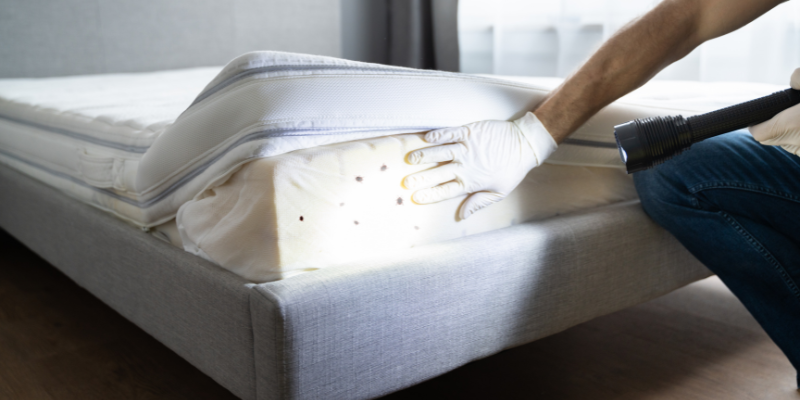
Start by removing all bedding. Check mattress seams carefully. Use a flashlight and slowly run a credit card along the seams to push out hidden bugs or eggs.
Bed bugs hide in these tight crevices because they feel safe and protected.
Box Spring
Lift the mattress and inspect the box spring. Look underneath and along the edges. Bed bugs often hide inside the fabric covering of the box spring.
Check corners and stapled areas where the material folds.
Bed Frame
Inspect the bed frame closely. Look at joints, screw holes, and cracks in wood or metal. Bed bugs hide in small hiding places near where people sleep.
Headboard
Remove the headboard if possible. Bed bugs hide behind headboards, especially if they are attached to the wall. Check both the front and back carefully.
How to Check Furniture and Upholstery
Bed bugs do not stay only in beds. They can spread to other parts of the room.
Sofas and Upholstered Furniture
Check sofas and upholstered furniture for signs of bed bugs. Look along seams, under cushions, and inside folds. Use a flashlight to inspect deep crevices and hidden hiding spots.
Dressers and Nightstands
Pull out drawers from dressers and nightstands. Check inside corners, underneath drawers, and along drawer tracks. Bed bugs hide in small cracks close to beds, especially in wooden furniture.
How to Check the Rest of the Room
If the infestation spreads, bed bugs can move beyond the bed area.
Baseboards and Wallpaper
Inspect baseboards for dark spots or shed skins. If the wallpaper is peeling, check behind it. Bed bugs hide behind loose wallpaper and in wall cracks.
Electrical Outlets
Carefully check around electrical outlets. Bed bugs can squeeze into tiny gaps behind outlet covers.
Luggage and Travel Items
After staying in a hotel room, inspect your luggage rack and suitcase. Bed bugs often hitch rides in luggage.
When you return home, place clothes in plastic bags and wash them in high heat. Use a hot dryer to kill bed bugs and any eggs that may be present.
If You Find Signs: Schedule a Bed Bug Inspection
If you find bed bugs or clear signs of bed bugs, do not panic. Avoid moving items to other rooms, as this can spread the infestation.
DIY sprays and store-bought products rarely solve the problem completely. Bed bugs hide in deep cracks and go through several life stages, making them difficult to eliminate without professional tools.
A licensed pest control professional can perform a thorough inspection and recommend professional bed bug treatments. Heat treatment is one of the most effective options because high heat can kill bed bugs at all life stages, including eggs.
At LaJaunie’s Pest Control, we provide professional pest control services for Louisiana homes and businesses. Our team understands how to get rid of bed bugs safely and completely.
If you suspect a bed bug infestation, contact our team to schedule an inspection with a trusted exterminator.
FAQs
How do I know if I have a bed bug infestation?
Common signs of bed bugs include reddish stains on sheets, dark spots, shed skins, and live bugs in mattress seams or furniture.
Can I get rid of bed bugs with DIY methods?
DIY sprays may kill some bugs, but they often miss hidden eggs and deep hiding spots. Professional bed bug treatments are usually more effective.
Should I throw away my mattress if I find bed bugs?
Not always. Many infestations can be treated with heat treatment and targeted pest control. A pest control company can inspect and recommend the best solution.